
The Basics
Clarify the product name, purpose and selection process before choosing a particular format.
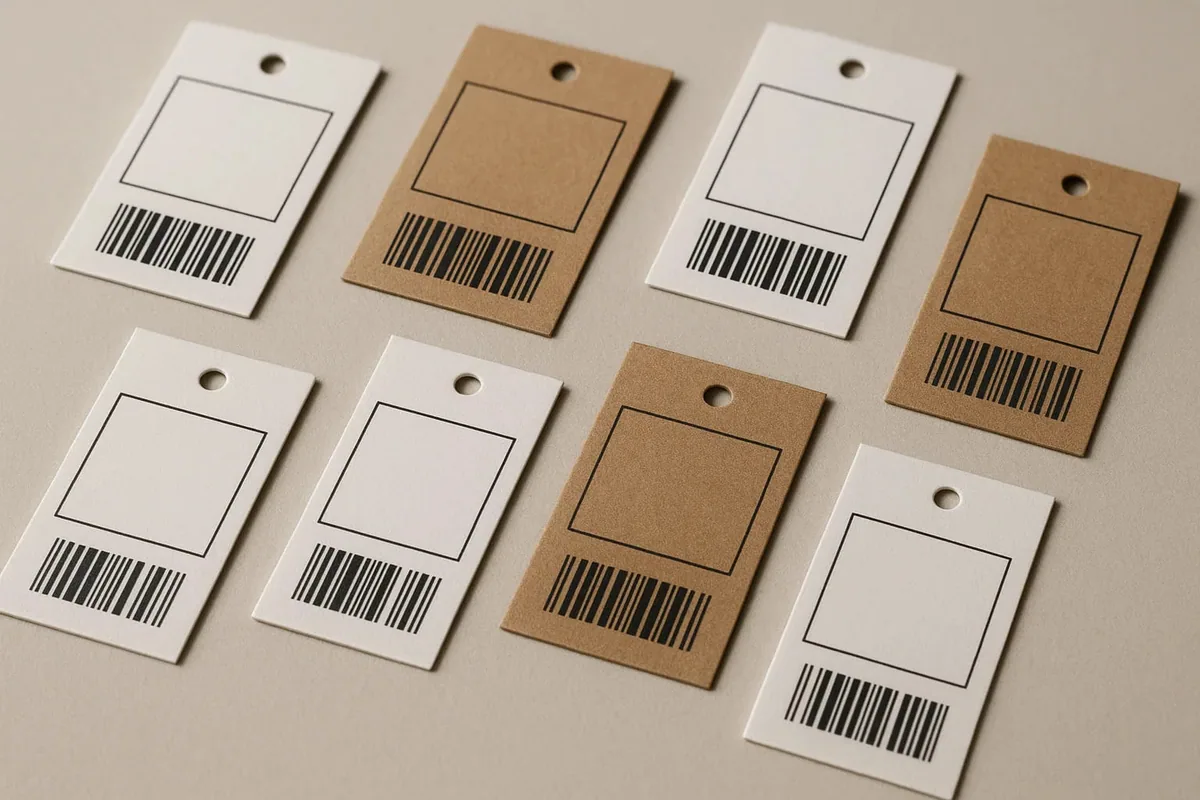
Whether you are ordering custom tags for the first time or preparing production artwork, these guides explain the decisions behind a usable print specification. They cover terminology, card weight, environmental considerations, artwork checks and production planning.
Follow the basics in order if your brief is still open. If the tag format has already been chosen, use the technical and ordering sections to verify the details before submitting artwork or requesting a quote.
Clarify the product name, purpose and selection process before choosing a particular format.
Understand how materials, production methods and surface choices affect handling and appearance.
Turn the creative idea into a complete brief that can be checked, quoted and produced.
Use the Design & Artwork Hub for file preparation, colour, typography, barcode and bleed guidance. Compare card directions in the material comparison guide, then review finishes and attachments only after the base material and artwork needs are clear.
The wider print and packaging resource library brings these subjects together by stage. It is useful when several decisions—such as card, hole position, string and special finish—must be assessed as one product rather than in isolation.
If you know what you need, get an instant quote on our standard rectangular tags.
Configure Tags