
Classic Stocks
Use familiar coated or uncoated surfaces when clear print reproduction, writing or a balanced all-purpose finish is the priority.
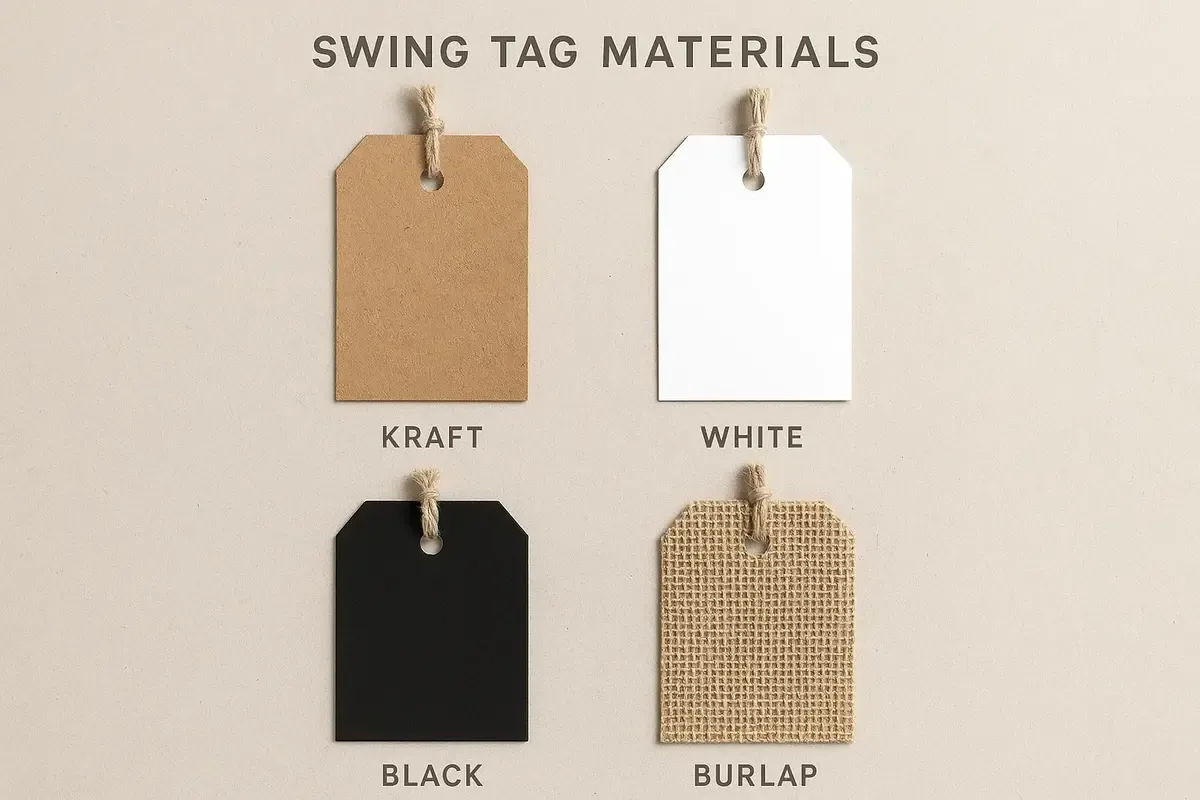
Material influences rigidity, surface feel, colour reproduction, writability and how a tag responds to handling. Compare coated, uncoated, kraft, recycled, textured, coloured and durable directions before deciding whether a surface finish is also needed.
GSM describes mass per square metre, not a universal thickness or stiffness. Two cards with the same GSM can behave differently, so choose by the physical requirement and intended print result as well as the number on a specification.
Use familiar coated or uncoated surfaces when clear print reproduction, writing or a balanced all-purpose finish is the priority.
Compare recycled and kraft directions by composition, colour, fibre variation, print contrast and any finishing limitations.
Choose a speciality stock where colour, texture, moisture resistance or tear resistance serves a defined product need.
Start with handling and information requirements. An uncoated surface can be useful when the tag must be written on; coated stocks prioritise a different print character; coloured or kraft boards affect ink contrast; and durable synthetic options address demanding environments. A lamination is a separate surface treatment and should not be treated as a substitute for an unsuitable base material.
Read the guide to card thickness and GSM, then use the material comparison guide to record a shortlist. Request physical samples when colour, stiffness or tactile feel is critical to the decision.
The best way to choose a material is to hold it in your hands. Request our free sample pack today.
Request Samples