
Card Thickness & GSM Guide

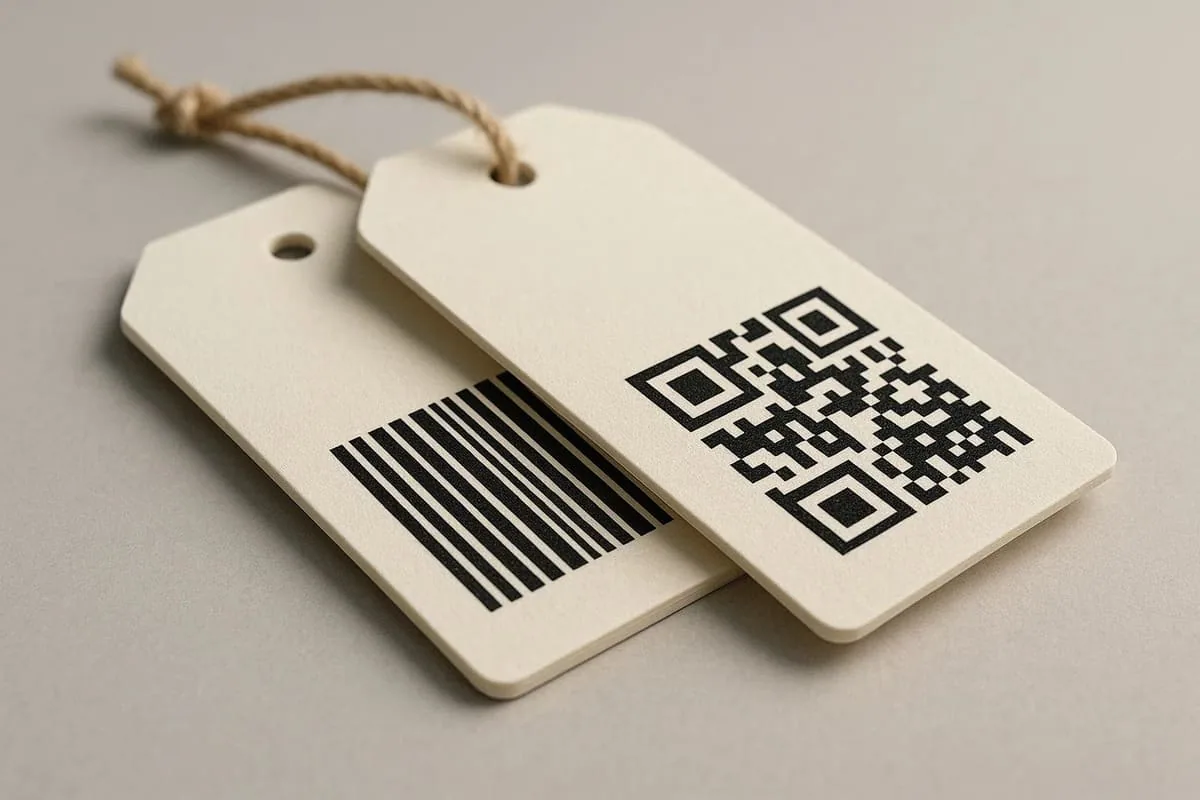
Swing tag card thickness close-up

Card thickness and GSM are related but not interchangeable. GSM measures sheet mass; caliper measures physical thickness; stiffness describes resistance to bending. Choose a swing tag stock by comparing the named board at the intended size, print coverage and finish.

Why the same GSM can feel different

Fibre type, coating, compression and bulk change how a sheet behaves. A dense coated board can feel smoother and thinner than a bulky uncoated stock at the same GSM. Recycled and kraft stocks may also have more visible fibre variation.

Match construction to format

Small flat tags
Can feel firm at a lower thickness because the short dimensions resist bending.
Large tags
Need enough stiffness to avoid drooping, especially with heavy ink coverage or a single top hole.
Folded tags
Require a stock that scores and folds cleanly without excessive cracking.
Eyeleted tags
Need enough material around the hole to support the eyelet and attachment.

How to approve a stock

  • Compare named material samples, not GSM alone.
  • View print on coated, uncoated and recycled alternatives.
  • Test writing or stamping where required.
  • Check fold, hole and eyelet performance.
  • Review the tag at actual size on the intended product.

Decision context

Connect GSM, caliper and stiffness to tag performance

GSM is the mass of a square metre of material; caliper is its measured thickness; stiffness describes how strongly it resists bending. Those properties are related but not interchangeable. Fibre, coating, density and construction can make two cards at the same GSM feel and behave differently.

Judge the board at the intended finished size. A large tag creates more leverage around a drill hole than a small tag, while a folded format must crease without uncontrolled cracking. Lamination, duplexing and eyelets can also change the thickness and behaviour of the finished construction.

Print requirements belong in the same decision. Fine detail and saturated colour may reproduce differently on coated, uncoated, kraft or textured boards. A writable price area needs a compatible surface and should be tested with the pen, stamp or overprint process that will actually be used.

Specify the named stock where possible, not only a GSM number. Compare a physical sample, check hole and fold positions, and confirm finish compatibility before approval. This creates a reproducible brief based on material performance rather than an assumed relationship between weight and quality.