Retail & Fashion
Plan branding, price, size, care, product codes and attachment around garments, accessories and retail display.
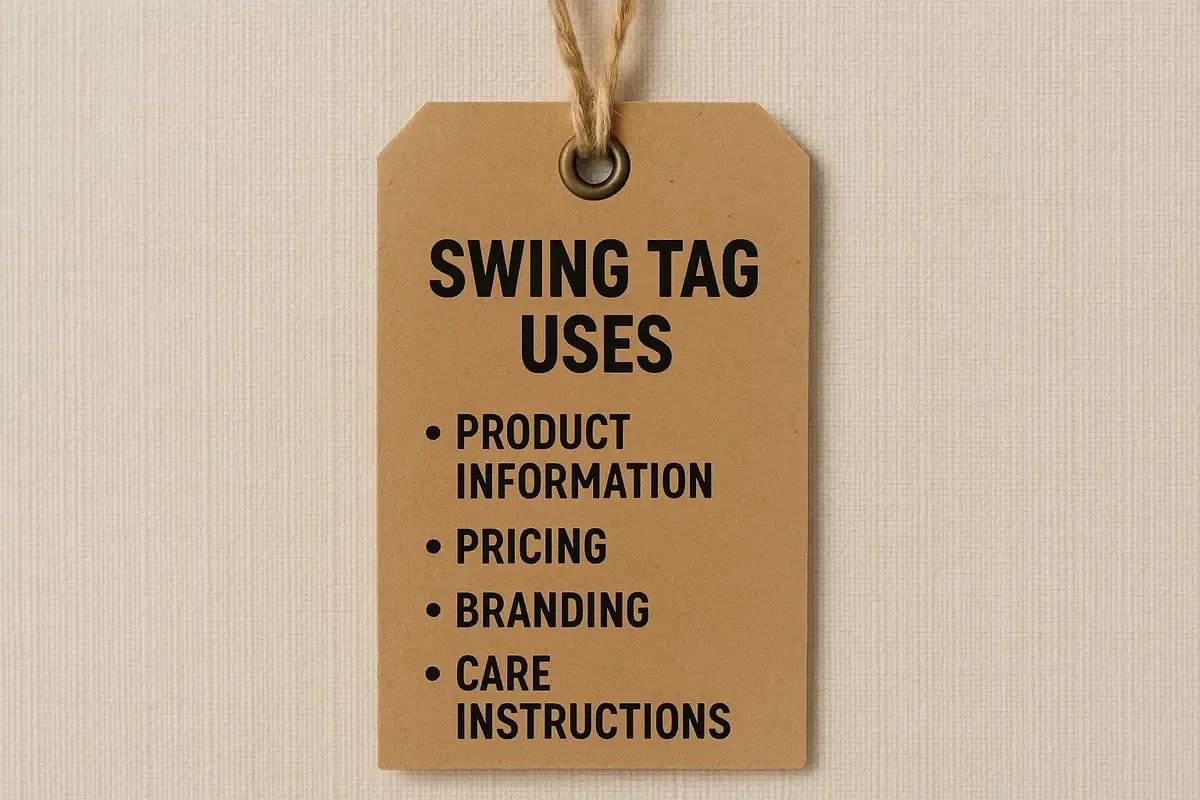
A swing tag should be selected around the product it accompanies, the information it must carry and the way it will be handled. Explore industry examples for apparel, jewellery, retail, food, beauty, packaging, gifts and seasonal promotions.
These pages do not prescribe one format for an entire sector. They show the practical questions to resolve—available attachment points, writing or scanning needs, exposure to moisture, information density and how the customer encounters the tag.
Plan branding, price, size, care, product codes and attachment around garments, accessories and retail display.
Match material and attachment choices to small products, containers, handling conditions and required product information.
Use tags for presentation, variable messages, gifting details, campaign dates and short-run promotional requirements.
List the fixed and variable content first: brand, price, size, care, ingredients, product code, barcode, QR code or event message. The list defines the usable print area.
Consider rubbing, moisture, repeated handling, writing and how long the tag remains with the product. These conditions inform card and surface choices.
Check where the tag can safely hang, the hole margin available and whether string, ribbon, an elastic loop or another attachment is appropriate.
If the context is clear and you are ready to compare physical formats, browse the full range of custom swing tag products.