For jewellery collections
Jewellery Swing Tags
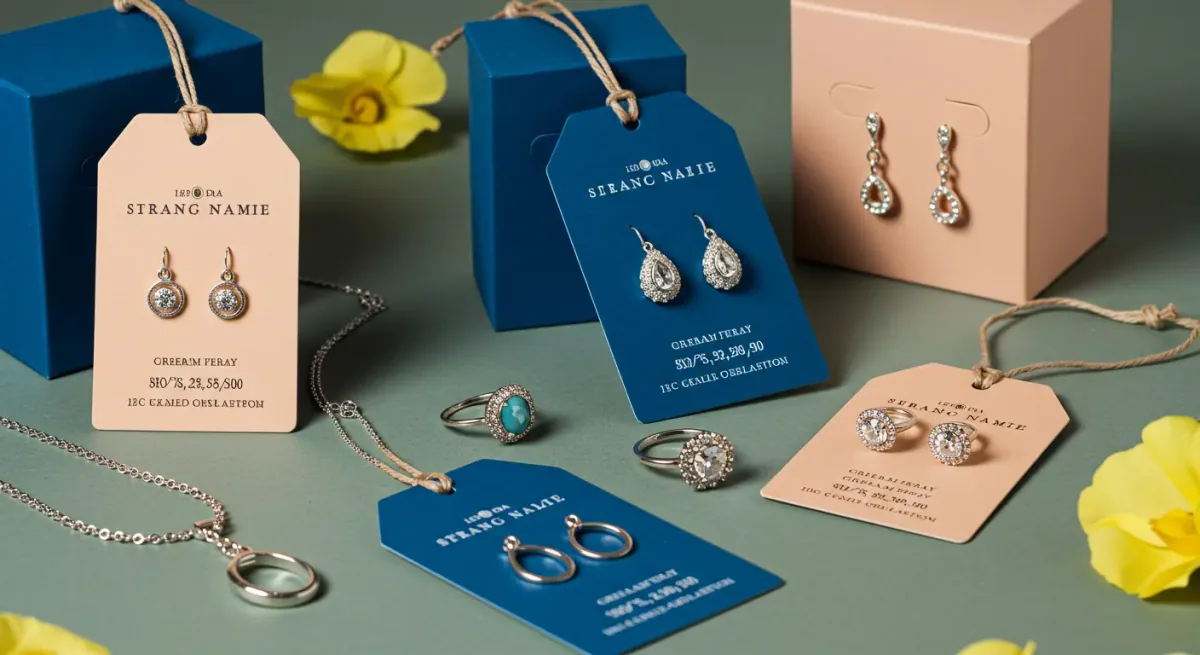
Small, considered tags help a jewellery collection show its brand, material and price details at the point of sale.
Choose a format
Relevant swing tag products
Plan the specification
What to consider for jewellery swing tags
Jewellery tags must carry useful details without competing with or scratching a small product. Scale, attachment softness and the way the item sits in a display tray are more important than using the largest possible print area.
Small-format legibility
Reduce copy before reducing type size. Keep prices, metal information and product references clear at normal viewing distance.
Delicate attachment
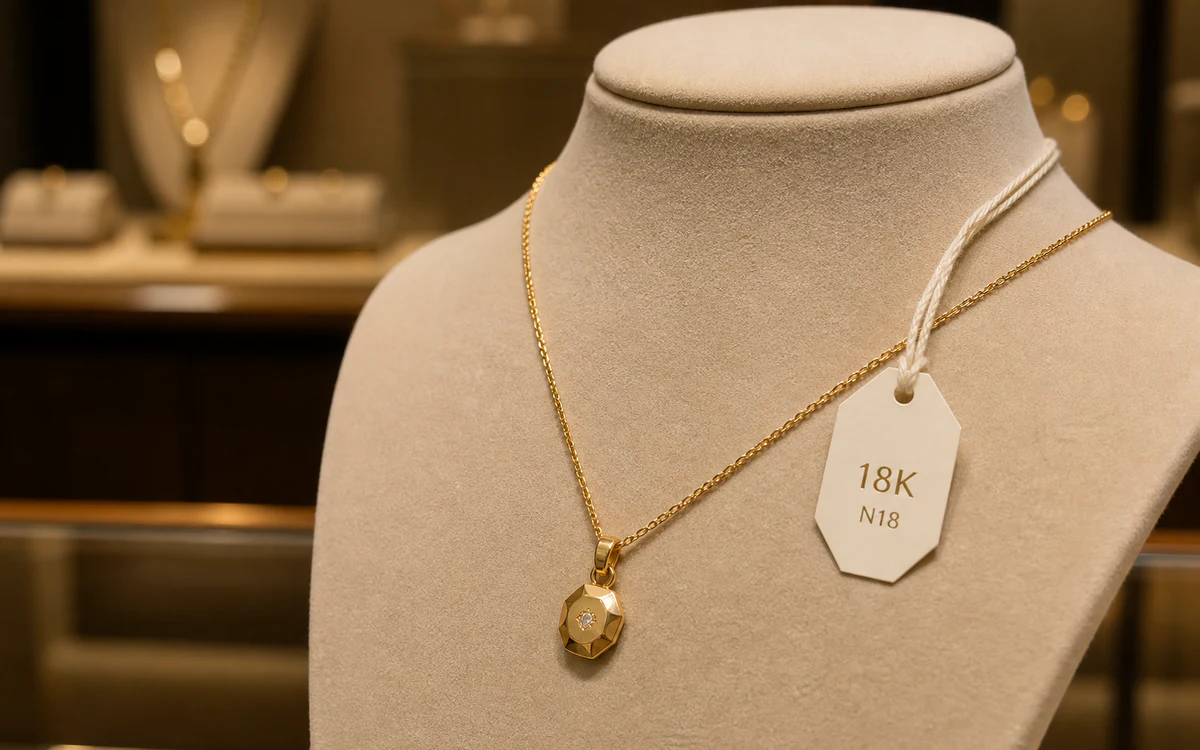
Use fine cord or a suitable loop and check that knots, eyelets and cut edges cannot mark polished metal, stones or soft packaging.
Display and security
Decide whether the tag remains on the item, its pouch or the display fixture, and whether staff need a duplicate stock reference.
Information hierarchy
Details the tag may need to carry
- Brand or maker name
- Metal, finish or stone description
- Price and product reference
- Size or length where relevant
- Care, warranty or QR destination
Production notes
Turn the idea into a workable tag
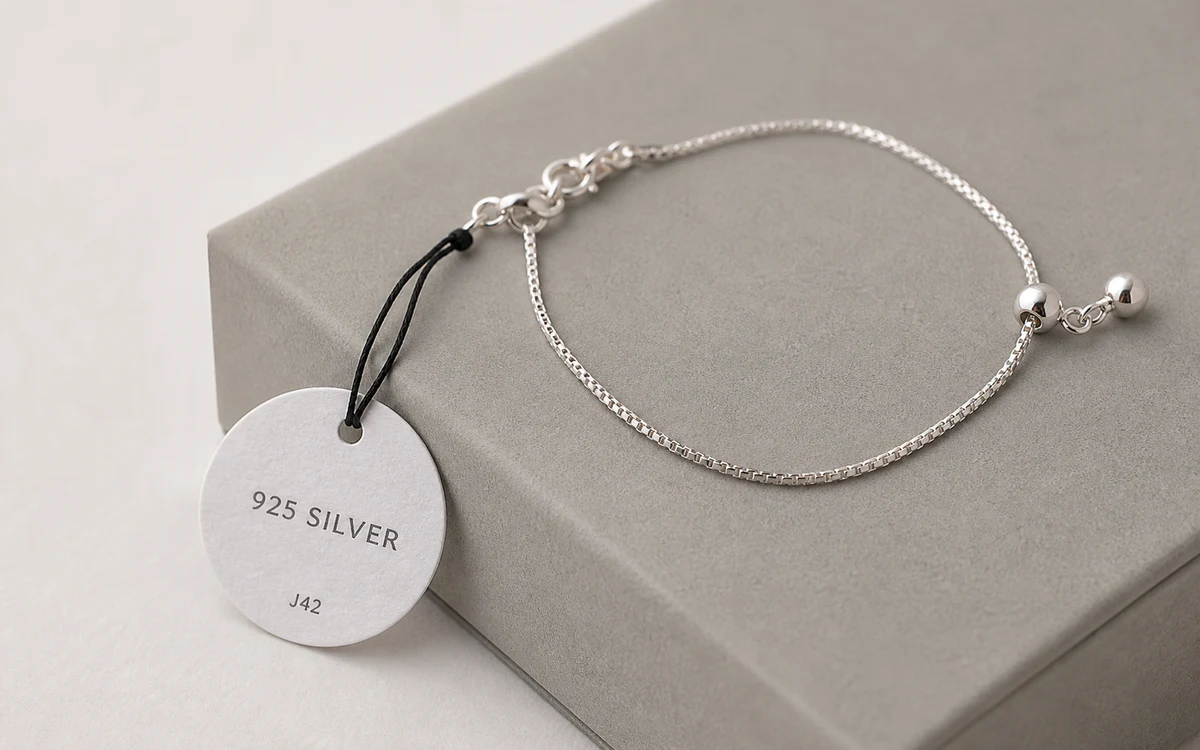
Compact rectangles and circles are easy to organise in trays, while a custom silhouette can support a distinctive collection if it retains enough area for readable information.
Test barcodes and very small reversed text at final size. Screen enlargement can make detail appear more robust than it will print.