
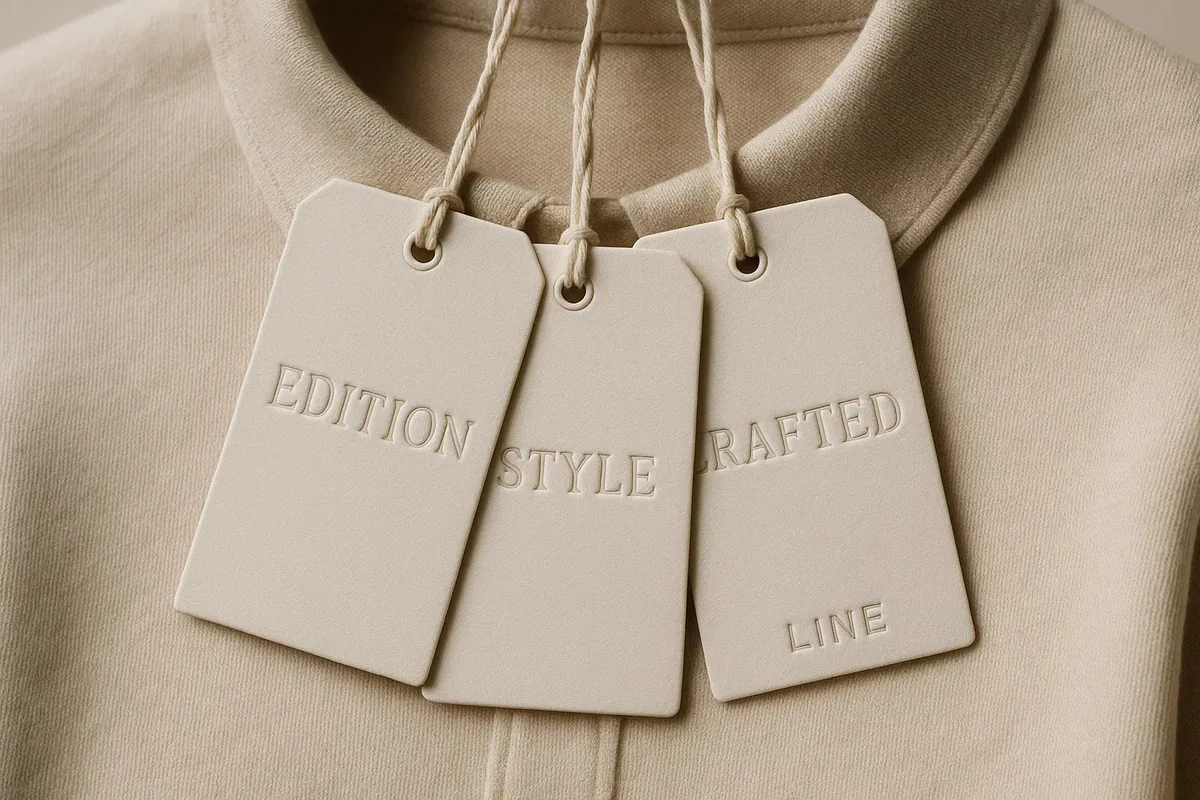
Choose artwork that can form cleanly
Simple logos, initials, borders and bold motifs usually produce clearer relief than dense illustrations or tiny type. Depth depends on board, artwork size and tooling; more depth is not always sharper.
Plan both sides of the tag
- Keep important reverse-side text away from the impressed area.
- Allow safe space from trim, holes, folds and perforations.
- Supply the emboss or deboss area as clean vector artwork.
- Confirm whether print or foil must register with the impression.
- Test textured, laminated or duplexed stocks before relying on a specific depth.
Blind and registered effects
A blind emboss or deboss uses no ink or foil and relies on light and shadow. A registered effect aligns the impression with printed or foiled artwork, which adds setup and registration considerations. Choose the simpler construction unless alignment is essential to the concept.