
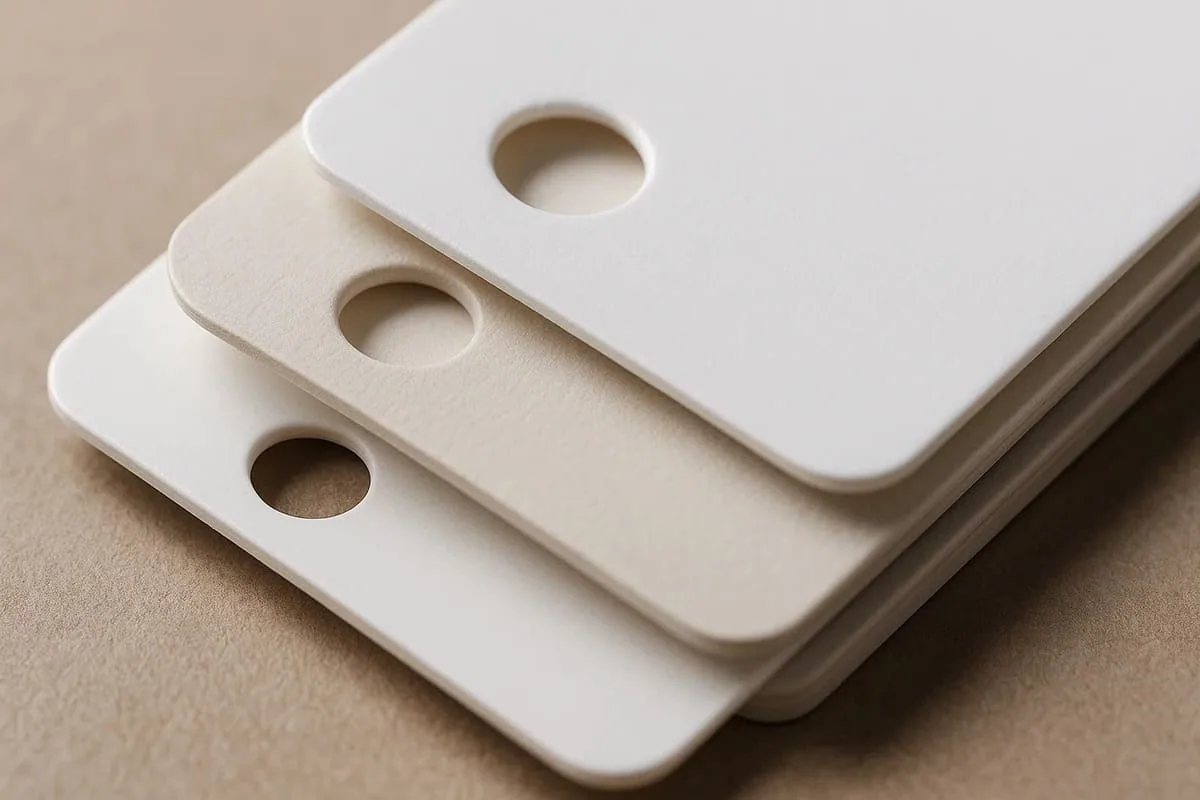
Gloss Lamination

Gloss laminated swing tag

Gloss lamination applies a clear reflective film over printed card. It can increase colour depth and surface wipeability while protecting against routine scuffing. Reflections, fingerprints, fold lines and mixed-material recycling should be considered before specifying it.

Where gloss works well

Gloss can support bright photographic artwork, food and drink promotions, children’s products and retail graphics where saturated colour and a polished surface are desirable. It is less suitable where glare would make small instructions or barcodes harder to read.

Artwork and handling considerations

  • Use adequate contrast for text viewed under retail lighting.
  • Keep barcode and QR code areas free from distracting reflections where possible.
  • Confirm scoring for folded or thick laminated tags.
  • Test write-on requirements because pens may not adhere reliably.
  • Use the finish on purpose rather than as a substitute for suitable card.

Gloss print versus gloss laminate

A glossy coated stock and a laminated tag are not identical. Coated paper affects ink holdout and surface sheen; lamination adds a separate film after printing. Ask which construction is being quoted when durability or disposal matters.

Decision context

Plan gloss around reflection, colour and handling

Gloss lamination creates a reflective film surface that can increase visual saturation and provide a wipeable outer layer for normal handling. Its result depends on the printed artwork and base card. Reflection can strengthen photography but may make small information harder to read under direct light.

Choose coverage by function. One-sided lamination can leave a reverse writing area, while two-sided coverage creates a different construction. Test pens, labels, stamps and adhesives on the finished film because behaviour on bare card does not predict behaviour after lamination.

Coordinate gloss with folds, perforation, die-cutting, foil and other local finishes. A barcode or QR code needs stable contrast and should avoid glare or curvature that interferes with scanning. Fine borders near trim also need the usual safe area despite the protective surface.

Review a physical example at several angles and beside the product. Record film sides, stock, artwork and any untreated area. Use accurate material and disposal wording for the complete laminated tag rather than assuming that the property of the underlying paper applies unchanged.