
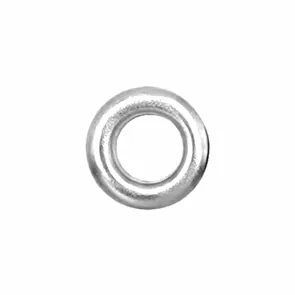
Metal Eyelets

Silver eyelet in a swing tag

An eyelet is a small metal or coloured ring fitted through the drilled hole. It can reinforce the attachment point and add a deliberate visual detail. Eyelet size, colour, card thickness and distance from the edge must be compatible.

Functional and decorative roles

Eyelets can reduce wear where a cord or chain moves against the board, especially on heavier or repeatedly handled tags. They also introduce a visible material and colour, so the finish should relate to foil, print and the product rather than being selected in isolation.

Plan the artwork and construction

  • Reserve a clear area around the fitted eyelet.
  • Confirm the hole and eyelet dimensions together.
  • Check that the board is thick and strong enough for setting.
  • Keep eyelets away from folds, perforations and narrow die-cut edges.
  • Approve the actual metal or coloured finish under normal lighting.

When an eyelet may be unnecessary

A simple lightweight tag with soft string may not need reinforcement. Removing the metal component can simplify cost, appearance and material separation. Use an eyelet where it solves a handling or design need.

Decision context

Use an eyelet as part of the hole construction

A metal eyelet can reinforce a drilled opening and create a visible detail, but it adds diameter, thickness and weight. Select it around the board, hole, attachment and product rather than as an isolated colour accent. Very small tags may lose a meaningful amount of artwork space.

Confirm external and internal dimensions, finish colour and placement. Brass, silver-coloured and dark finishes can appear different under product photography and beside foil. If an exact metallic match matters, compare physical components rather than relying on descriptive names or screen swatches.

Keep type, borders and special finishes clear of the setting area. The board needs enough margin around the eyelet to remain stable, especially on shaped tags, large tags or work exposed to repeated pulling. Folded constructions may require the eyelet through one or several panels.

Test the complete combination of tag, eyelet and string on the product. Check edges, movement, weight and possible contact with delicate surfaces. State whether eyelets and attachments are fitted or supplied separately so the quote and packing method cover the intended assembly.