
For makers and artisans
Tags for Handmade Products
Use a compact printed tag to add a maker story, care note, price or personal finishing touch to handmade products.
Choose a format
Relevant swing tag products
Plan the specification
What to consider for tags for handmade products
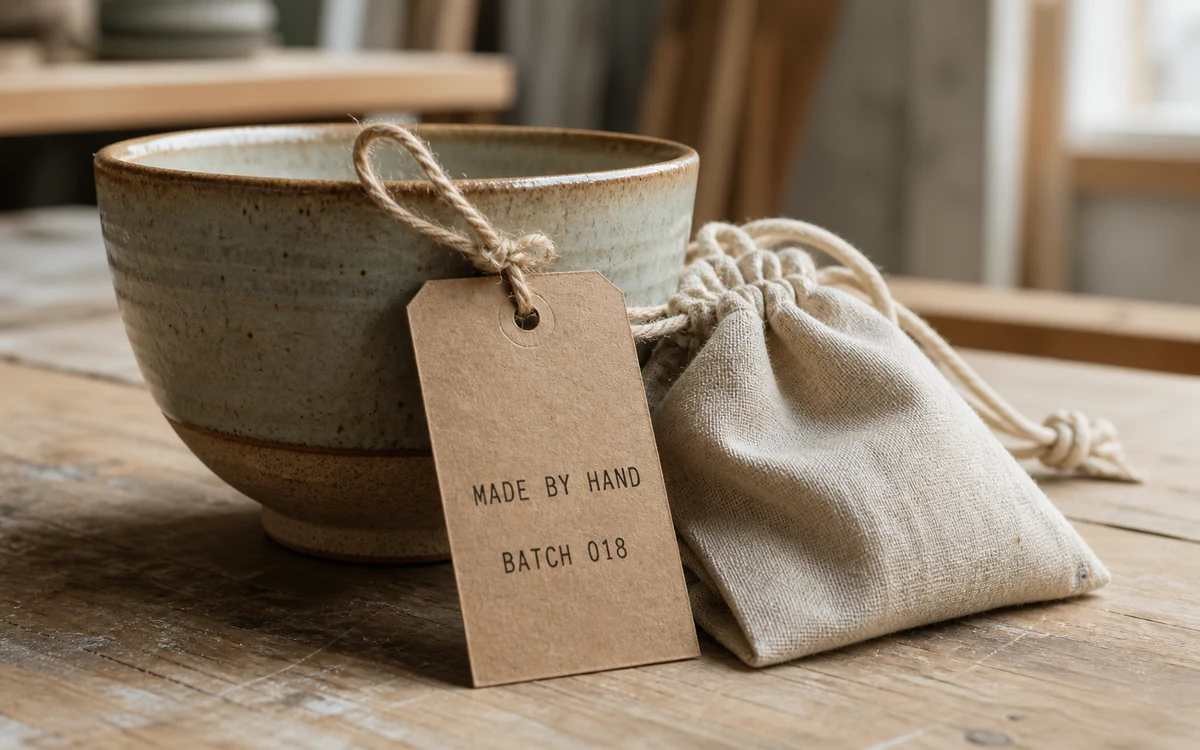
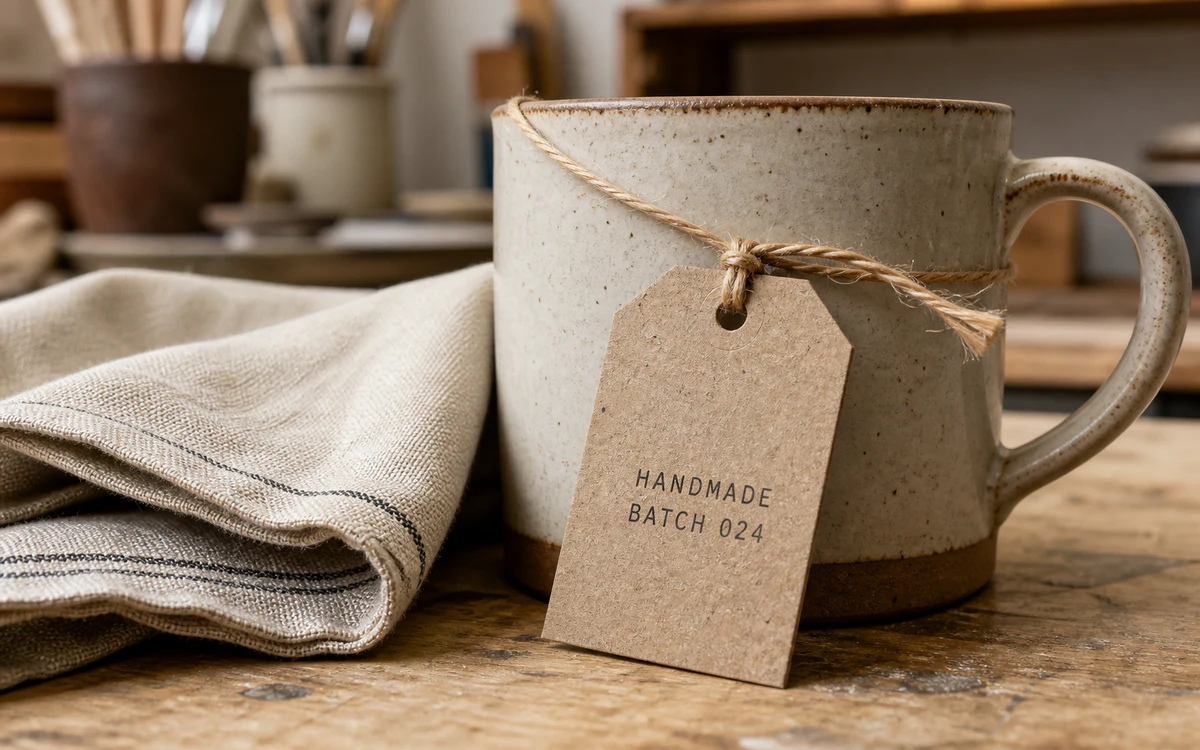
A handmade product tag should preserve the maker’s character while making practical buying information easy to find. Natural stocks can feel appropriate, but the material claim and print result should be checked rather than assumed from appearance.
Maker story
Use one short, specific statement about process, place or materials instead of filling a small tag with generic brand language.
Writable areas
Uncoated and kraft surfaces can support handwritten batch, scent, price or edition details; test the intended pen or stamp first.
Product variety
Plan common artwork with a controlled area for variable names or references so small batches do not create unnecessary obsolete stock.
Information hierarchy
Details the tag may need to carry
- Maker or studio name
- Product name or variation
- Materials or ingredients where useful
- Care or safe-use instruction
- Price, batch or contact detail
Production notes
Turn the idea into a workable tag
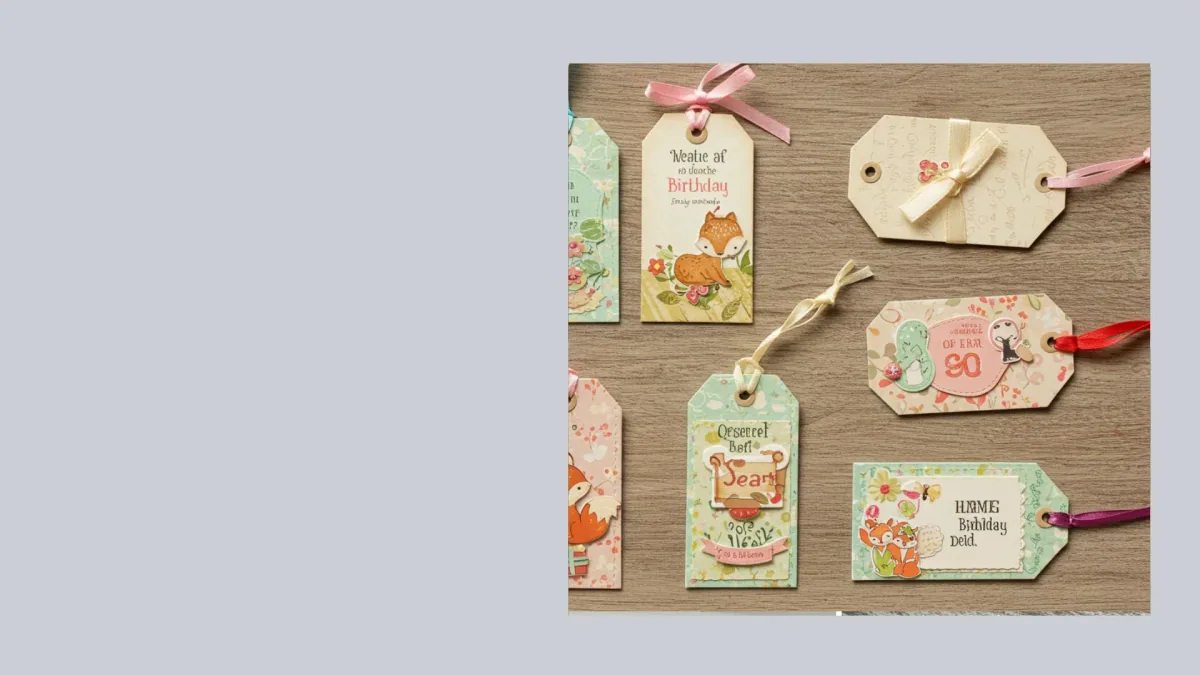
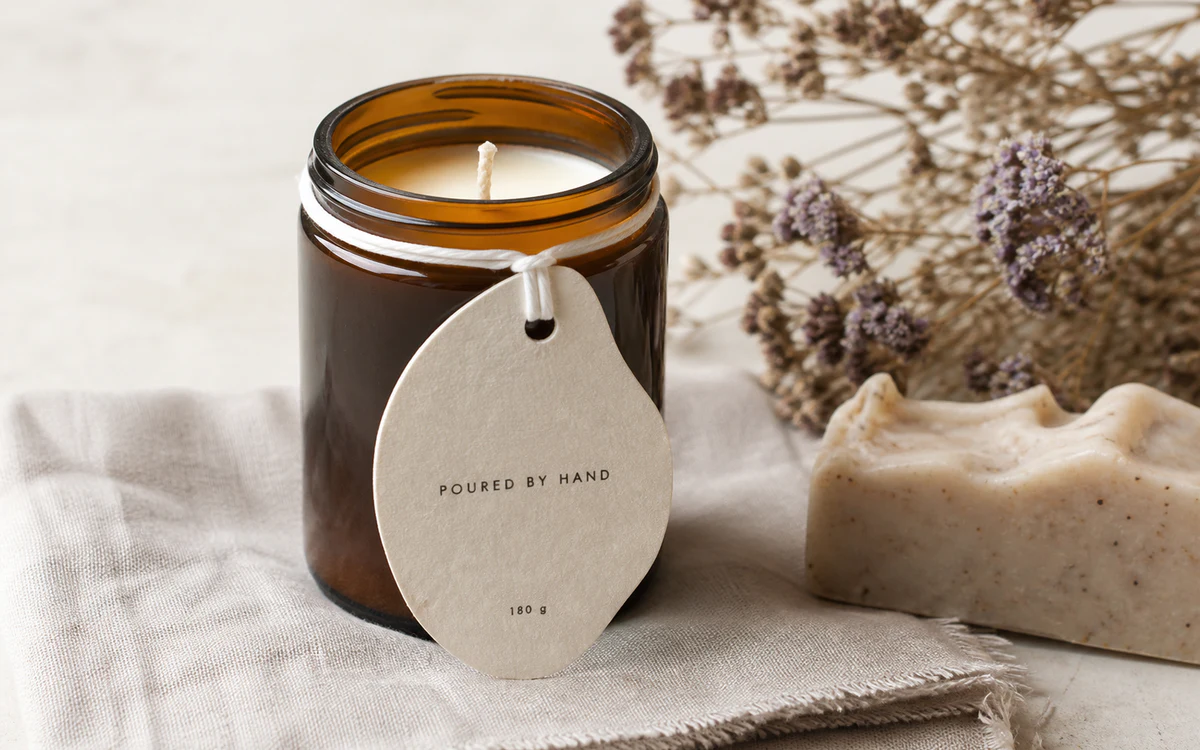
A standard or gift tag works for most handmade ranges. A custom shape is useful when the silhouette is genuinely recognisable and does not reduce writing or information space.
Choose attachment length around the real jar, handle, pouch or product. A visually attractive string can still be awkward for the maker to apply repeatedly.