
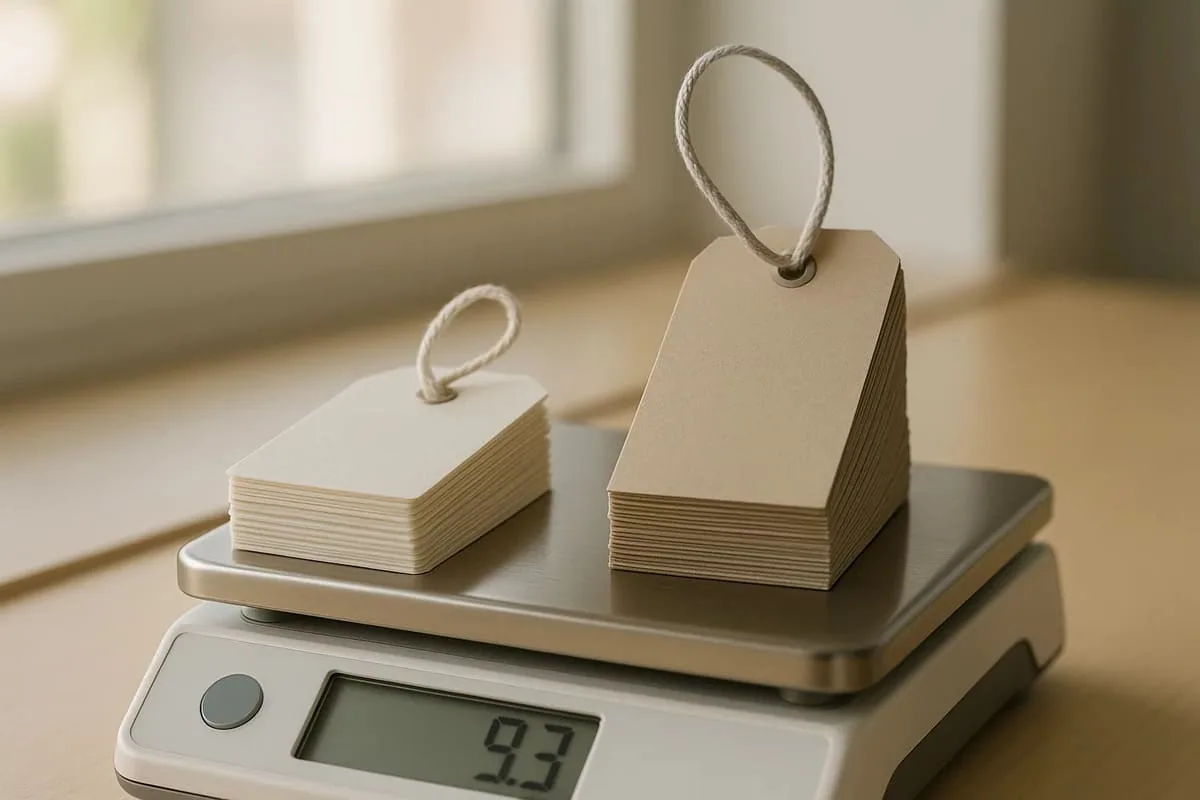
GSM, thickness and stiffness are different
GSM is useful for comparing versions of the same stock, but it is not a universal measure of rigidity. An uncoated bulky board may be thicker than a dense coated sheet at the same weight. Caliper describes physical thickness, while stiffness describes resistance to bending. Ask for a sample if the tactile result is commercially important.
How weight changes the tag
- Lighter stocks
- Reduce bulk and may suit inserts, short-life promotional tags or folded constructions, but can curl or feel less substantial.
- Mid-weight card
- Balances printability, handling and cost for many standard clothing, retail and gift applications.
- Heavy or duplexed board
- Creates a more rigid premium object but may need scoring for folds and careful testing around holes or eyelets.
Printing and finishing considerations
Heavier does not automatically mean better. Very dense or textured boards may reproduce fine detail differently from coated card. Folding against the grain can crack, while thick laminated constructions can change hole and eyelet behaviour. The artwork, finish and intended attachment should be reviewed with the stock.
A practical selection method
- Identify whether the tag needs to feel flexible, firm or rigid.
- Compare samples in the intended finished size.
- Check writing, stamping or barcode requirements.
- Confirm compatibility with folds, perforations, foil and lamination.
- Approve the named stock rather than relying on GSM alone.