
Common Artwork Mistakes

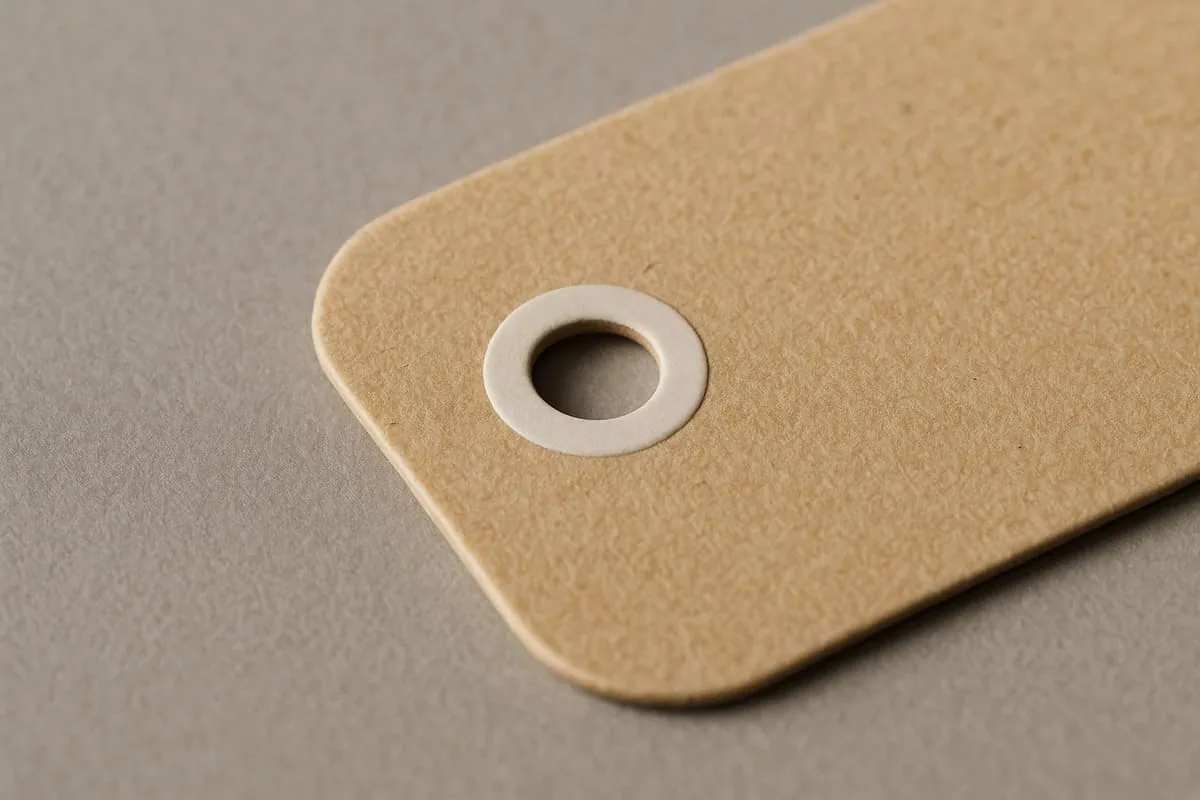
Swing tag artwork detail near a corner

The most common swing tag artwork problems are incorrect size, missing bleed, text too close to trim or drill holes, RGB colour, unembedded fonts, low-resolution images and unclear layers for foil or Spot UV. A short pre-flight check before submission prevents most delays and avoidable reprints.

Trim, bleed and safe area

Missing bleed
Background colour or images that stop at trim can leave an unintended white edge after cutting.
Unsafe text
Small movement in cutting means important text and borders need breathing room inside the finished edge.
Unmarked holes and folds
Artwork can appear balanced on screen but become obscured by string, an eyelet, perforation or fold.

Colour, images and fonts

  • Prepare process artwork in CMYK unless a named spot colour is agreed.
  • Use an appropriate output profile and do not judge print only from a bright screen.
  • Supply placed images at sufficient effective resolution for their printed size.
  • Embed or outline fonts while retaining an editable master file.
  • Check fine reversed type and thin rules on dark or textured stocks.

Special-finishing artwork

Foil, Spot UV, embossing, debossing and cutting paths should be supplied as clearly named vector separations. Do not simulate the effect with gradients or photographic textures on the production layer. Confirm overprint, trapping and minimum-detail requirements for the chosen process.

Version and proof control

Use descriptive filenames, remove obsolete files and state which version is final. Check prices, SKUs, barcodes, URLs and spelling at the proof stage. A technical artwork check can identify production risks, but responsibility for factual copy and approved content remains with the customer.

Decision context

Add a preflight check before proof approval

Compare the document size with the written finished dimensions and the current dieline. Confirm bleed extends beyond every cut edge and that essential content remains inside safe areas. Mark holes, folds, perforations and shaped paths clearly so production features cannot be mistaken for printed artwork.

Check colour mode, named spot colours, overprint, image resolution and logo vectors. Embed fonts or outline approved final text as requested. Review the smallest type, reversed copy and line weights at actual size, especially on uncoated, kraft, coloured or textured material.

Inspect barcodes and QR codes for correct data, contrast and clear space, then test them from a final-size print. For variable work, compare record count, leading zeros, duplicates and representative long values. Remove hidden alternatives and obsolete layers before export.

Open the exported PDF independently and review every page and side. Use a consistent filename and retain the approved version. A preflight does not replace the proof; it makes the proof more meaningful by removing preventable technical ambiguity before the job is scheduled.