
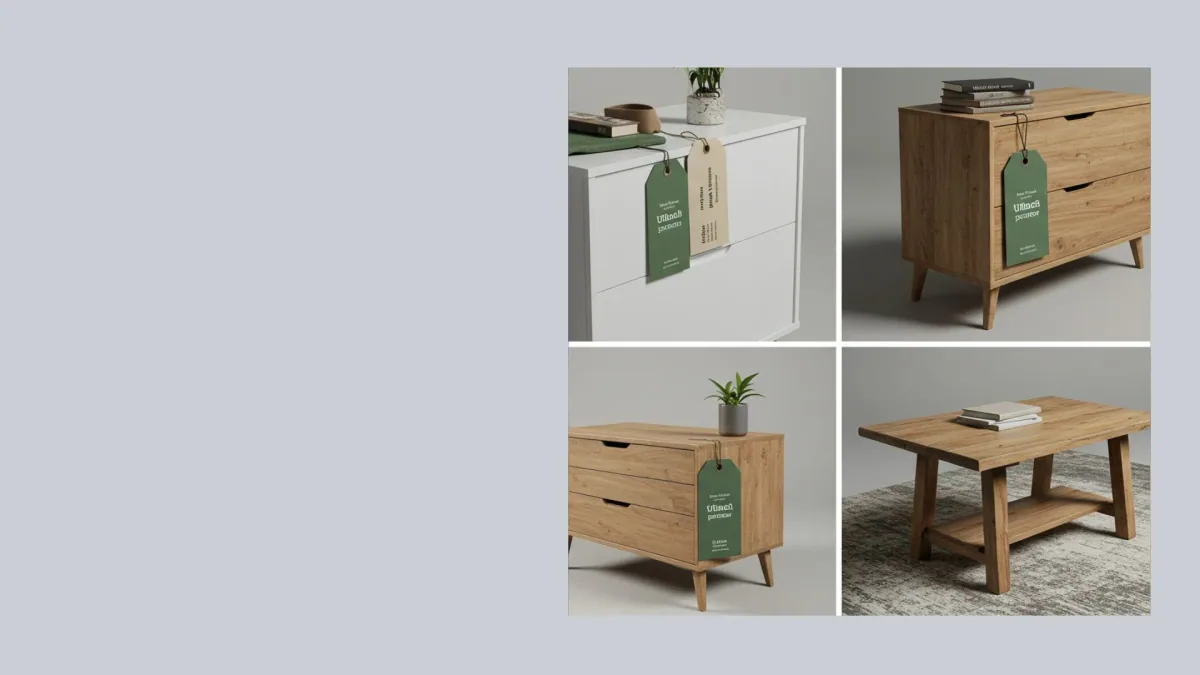

Description
A product-specific format
Furniture Labels for product presentation
Furniture Labels give product teams a dedicated format for the information and presentation requirements of the item being sold. The specification should begin with the product it will be attached to, then account for the information the tag needs to carry.
Use the form to record the final size, card direction, print sides, finishing and attachment for furniture labels. This keeps the practical decisions together before artwork is supplied or confirmed.
Where this format fits
Furniture Labels uses
Care and cleaning
Set out how a fabric, leather or timber finish should be cleaned, and what will damage it, on a tag that stays with the piece after delivery.
Material and origin
Declare the filling, frame timber, upholstery composition and country of manufacture where the piece has to carry that information.
Warranty and batch reference
Record the guarantee period and a batch or serial reference so a later claim can be matched back to the production run.
Assembly and handling
Warn about lifting points, fixings supplied and anything that must not be dragged, before the piece is unwrapped rather than after.
Additional information
Build the specification
Furniture Labels specification
The final furniture labels specification should be agreed from the product requirements, artwork and quantity—not guessed from a generic price table.
- Size and proportions
- An identification tag is read once, carefully, by someone who has just taken delivery, so it can carry far denser information than a retail tag — but it still needs a clear reading order rather than a wall of text.
- Card and surface
- Select the material and surface direction that suit handling, writing requirements and the planned artwork.
- Print and information
- Specify one or both sides and identify any barcode, variable information or mandatory copy.
- Hole and attachment
- Describe how the hang tag will attach to the product, including the preferred string, loop, ribbon or hardware.
- Finishing
- Discuss lamination, foil, Spot UV, embossing or other finishing only where it supports the artwork and use.
- Quantity and deadline
- Share the quantity and required date so the quote can be based on the real requirement.
Material, print and finish
Choose the details around the product
Furniture Labels format alone does not determine the finished hang tag. The card, print, finish and attachment should be chosen together with the product context and artwork.
- Material: Compare available card directions before finalising the design.
- Printing: Plan the information that needs to appear on each side of the tag.
- Finishing: Use finishing options where they improve durability, contrast or brand presentation.
- Attachment: Match the attachment to the product, hole position and intended customer interaction.
Artwork and file guidance
Prepare the artwork
Plan the finished format before export
Keep essential furniture labels copy clear of the trim edge and attachment area. The page-specific artwork guidance explains the considerations for formats, holes, folds and variable product information.
If furniture labels artwork is not final, submit the product and specification details first. This gives the production conversation a clear starting point without forcing a premature file upload.
Continue your research
Further swing tag guidance
Questions and answers
Questions before you order
Furniture Labels FAQs
Are these adhesive labels or tie-on tags?
These are printed tie-on and hanging formats attached with string, tape or an eyelet. They are not self-adhesive stickers or sewn-in fabric labels, which suit a different point in the assembly process.
What has to appear on a furniture label?
That depends on the piece and the market it is sold into. Care and cleaning guidance, upholstery composition, timber type, country of manufacture, a batch reference and the guarantee period are the details most often carried.
Will a furniture label survive storage and delivery?
A furniture tag spends longer in a warehouse than most swing tags spend in a shop, so a heavier board and a reinforced hole matter more than the surface finish. Waterproof stock is worth considering for unheated storage.
Can one label carry a batch or serial number?
Yes. Variable information can be printed so each tag carries its own reference, which is what makes a later warranty claim traceable to a specific run.