Start with the job the code must do
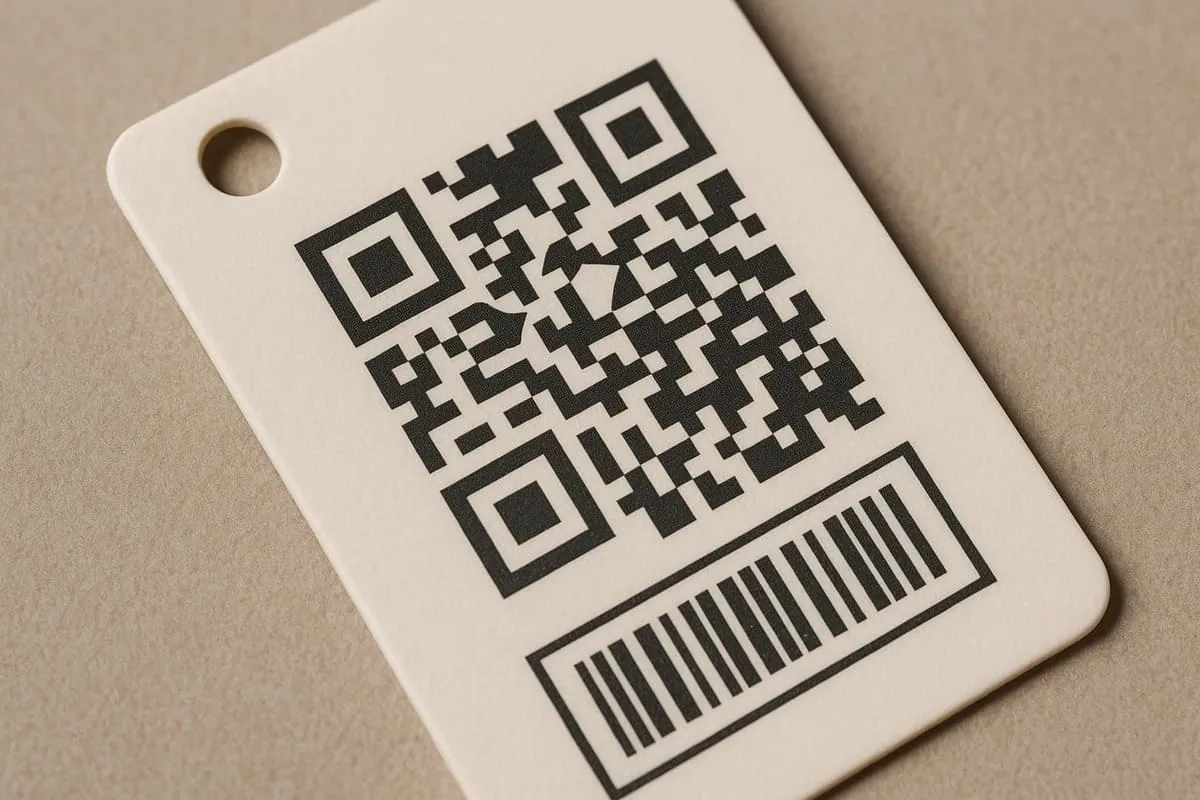
Use a barcode when stock control or retail scanning needs a product identifier. Use a QR code when the tag needs to send a customer to a changing destination such as care information, instructions, a product page or a campaign.
The data carried by the code, the final tag size and the surface it will be printed on all influence the space that should be reserved. Share the intended code and its purpose in the brief rather than treating it as an afterthought.
Place codes where they can be scanned
Keep the code away from the hole, string, fold and trim edge. A clean surrounding area helps a scanner distinguish the code from nearby copy, patterns and finishing effects.
Avoid placing a code across a fold or a strongly textured area. If a dark card, foil or special finish is planned, ask for a production check before finalising the artwork.
Use a final-size proofing routine
Do not judge scanability only from a zoomed-in screen view. Export at final print size, check that the code remains sharp, then test a representative file on more than one device where possible.
Practical checklist
- Supply the original barcode or QR data rather than a screenshot where possible.
- State the intended scan destination and whether it may change after print.
- Keep human-readable product information nearby when it is useful to the customer.
- Include the code in the artwork review and test at final size.